







The Wrong Way Home by Shunali Khullar Shroff explores the inner life of Nayantara (Nayan), a woman who looks successful from the outside but feels lost within. She is divorced and struggling to sustain her boutique PR agency in a world where perception matters more than reality. What hurts her most is seeing her ex-husband move on and marry a young influencer. Nayan keeps returning to social media and watching their captured-for-the-gram photographs, which only deepens her sense of stagnancy. She is unable to let go of the past and is unsure how to navigate the future.
Sociologist Zygmunt Bauman’s theory of “Liquid Modernity” runs throughout the novel. Liquid Modernity is a condition marked by fluid relationships, fragile commitments and identities that are constantly reshaped by circumstance. Nayan’s life reflects this liquidity with striking clarity. Her divorce itself is an outcome of modern affinal instability, where permanence has given way to provisional arrangements. Her failed romantic encounter with Arjun and later falling in love with Vikram are not framed as moral failings but as part of a restless search for emotional anchorage in a world that offers none. Love, in this novel, is not solid; it is tentative, negotiable and always at risk of dissolving. It is liquid!
Paradoxes of life
One of the novel’s central paradoxes lies precisely in its geographical settings. Mumbai, with its relentless hustle and glamour, stands in sharp contrast to Landour, the quiet, reflective hill town where Nayan’s mother, Kalpana, lives. Nayan lives between these two cities, shuffling between ambition and introspection, noise and silence. Mumbai hones her professional instincts but drains her emotionally, while Landour offers calm but also forces her to confront unresolved questions about belonging and purpose.
Another paradox that the novel investigates is that of independence and intimacy. Nayan is financially independent and capable, yet she wants love and companionship. Shroff treats this not as a weakness but as a natural human need. Wanting freedom and wanting connection can coexist.
The third major paradox lies at the heart of Nayantara’s profession itself. As a PR businesswoman, she manages reputations for Bollywood stars and political figures. Her prowess at polishing public images, controlling narratives and ensuring social acceptance for others is nonpareil. Although she excels at making other people’s lives appear admirable, she struggles to hold her own together.
The relationship between Nayan and her mother, too is a relationship of paradoxes. Kalpana represents idealism and an uncompromising moral conscience, guiding her choices by ethics rather than pragmatism. Nayan, as a PR maverick, often has to represent clients whose values clash with her own and/or those of her mother. This tension highlights the compromises demanded by modern professional life and the quiet guilt that accompanies them.
Amid all these paradoxes and liquid relationships, the friendship between Nayan and Rishi brings some stability in the plot. Their bond is marked by wit, ease and an unspoken understanding. Rishi does not try to fix her or demand anything from her. His eye rolls and steady presence offer comfort in a life full of uncertainty.
Single womanhood
The Wrong Way Home also navigates the many difficulties faced by a single woman, especially one in her forties. After her divorce, Nayan becomes more visible in ways she never asked for. She is looked at, judged and often misunderstood not only by men but also by women.
These discomforts appear in small but telling moments, such as when a male friend casually hits on her, assuming emotional openness as an invitation. The novel also shows the hostility towards women who live alone. These moments reveal how loneliness is often imposed by social orders rather than personal choice.
The divorce does not leave her financially jeopardised – Nayan’s struggles are emotional and existential. Throughout the novel, she reflects on love, work, ageing and self-worth from a distinctly feminist perspective, one that values autonomy and acknowledges vulnerability.
For Nayan, home is discovered slowly – by making peace with her discomfort and understanding what truly sustains her. The title suggests that finding “home” is not a linear journey. There is no dramatic “arrival” at the end of the novel, no moment where Nayan definitively finds home. Instead, it offers something quieter and perhaps more honest: the idea that fulfilment lies in finding a delicate balance between ambition and rest, independence and intimacy, solidity and liquidity.
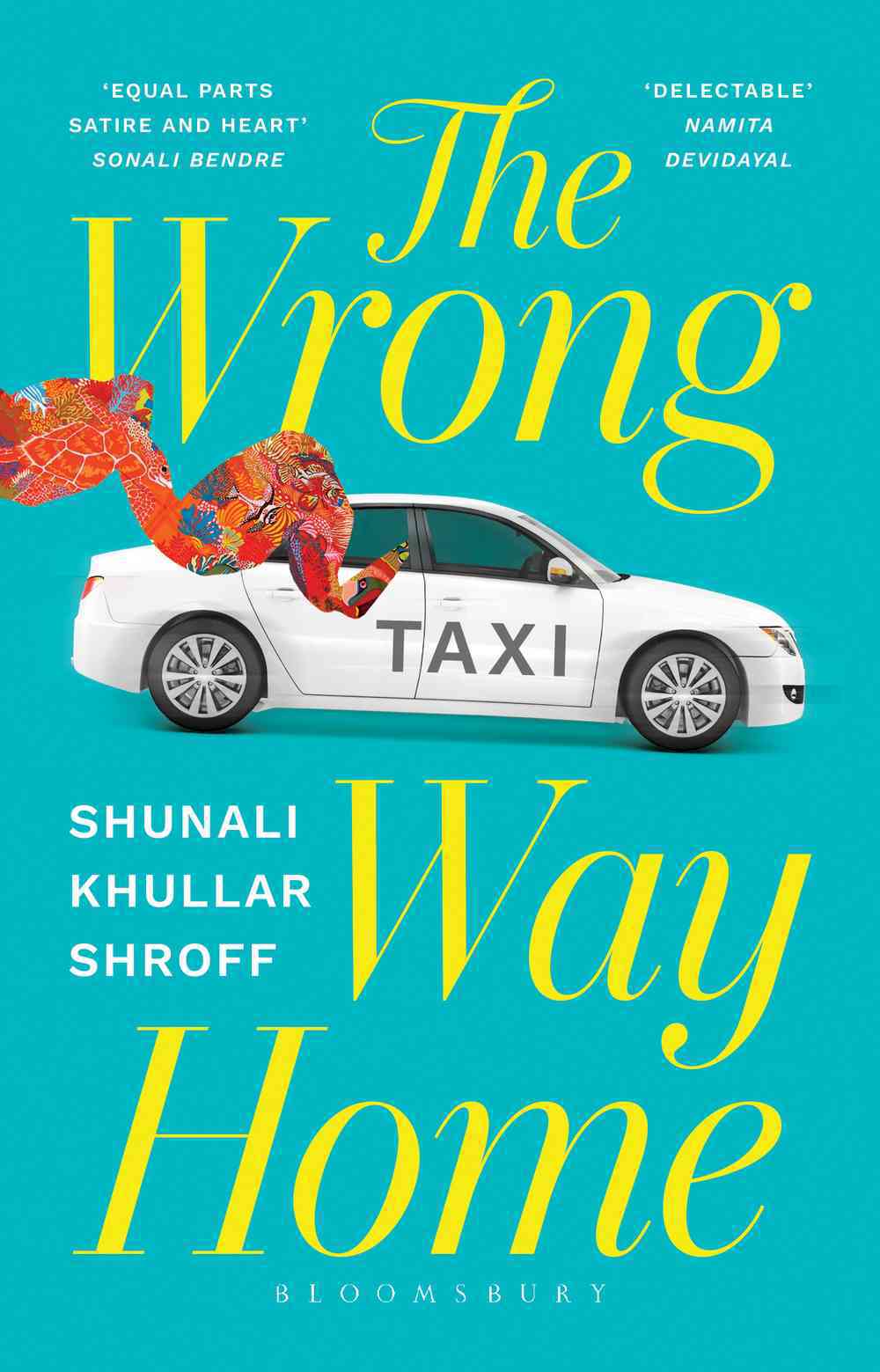
The Wrong Way Home, Shunali Khullar Shroff, Bloomsbury India.
